
Are your chromite crushing test results consistently inconsistent? The problem might lie in the sample preparation! As a key raw material in industries such as stainless steel production and refractory materials manufacturing, the physical properties testing of chromite is crucial for mineral processing and smelting. Among the various testing stages, the results of the crushing experiment directly affect the optimization of subsequent process parameters, and the starting point of all this is the standardized preparation of the sample. This article will share proven chromite sample preparation techniques based on industry practices.
The accuracy of the chromite crushing test is directly related to the sample preparation techniques. Professional sample preparation ensures uniform particle size and representative composition, preventing distortion of core test data such as crushing energy consumption and degree of liberation due to sample variations.
Table of Contents
Why is it necessary to conduct chromite crushing tests?
Applications of Chromite Crushing Tests
Chromite crushing tests play three core roles in the industrial chain:
- Pre-assessment of ore beneficiation: Crushing tests can clarify the liberation characteristics of chromite, increasing the degree of liberation of individual chromite particles to over 90%, thereby improving the subsequent concentrate recovery rate. Typically, the binding forms of chromite and gangue minerals vary significantly in different deposits, and the test results can guide the beneficiation plant in determining the optimal particle size threshold for crushing and grinding.
- Smelting Process Calibration: Smelting plants require raw materials to be processed to a specific particle size. The test can determine the optimal balance between crushing energy consumption and economic efficiency.
- Quality Control: Crushing tests can standardize the processing procedures for different batches of ore, ensuring that the particle size deviation of the finished chromite powder is minimal, thereby stabilizing the production process for downstream customers.
Core Objectives of Chromite Crushing Test
- Determining Ore Hardness: Through Bond work index testing or drop-weight impact testing, quantify the energy consumption required for crushing chromite. High-hardness ore requires a two-stage crushing process using a jaw crusher followed by a cone crusher, while low-hardness ore can be directly finely crushed using a hammer crusher.
- Analyzing Crushing Characteristics: The weak magnetic properties of chromite can cause particles to adhere to the inner walls of the equipment during crushing. The test should record the residue rate and optimize the equipment cleaning cycle. For highly abrasive ore, high-manganese steel liners should be used to extend equipment lifespan by more than 30%.
- Determining Optimal Crushing Particle Size: Chromite has high density and hardness, requiring optimization of the crushing equipment’s discharge port design to reduce dead zones and residue. By comparing concentrate grade and blast furnace reduction rate at different particle sizes, in conjunction with subsequent beneficiation or smelting requirements, the optimal balance between crushing efficiency and energy consumption can be found, minimizing sample loss.
Sample preparation tips for crushing chromite ore
The results of the chromite crushing test directly affect the reliability of subsequent processes such as mineral processing and smelting, and sample preparation is the first step in ensuring data accuracy. Many experimental errors do not stem from equipment or operation, but rather from the initial sampling, drying, and sample division processes.
1. Representative Sampling
Chromite ore often exhibits sampling bias due to uneven mineral distribution; therefore, representative sampling is crucial. It is generally recommended to use a grid method to select 10 points evenly distributed across the mining face or stockpile. The sample size at each point should be at least three times the maximum particle size of the ore (typically 5-10 kg).
Sample Reduction:
The sample can then be reduced to the required laboratory quantity (usually 1-2 kg) using the quartering method: for example, a thoroughly mixed chromite sample is piled into a cone, flattened into a disc, and divided into four equal parts by drawing a cross through the center. Two diagonally opposite parts are discarded, and the remaining two are mixed, and the process is repeated until the desired weight is reached. For chromite with a high clay content, drying before reduction is recommended to prevent sample clumping and ensure homogeneity. The reduced sample should be sealed and labeled to prevent oxidation or contamination. For large quantities of samples (>50 kg), a rotary sample divider is more efficient and ensures that the mineral composition of each subsample is consistent with the original sample.
2. Sample Drying and Pre-Crushing
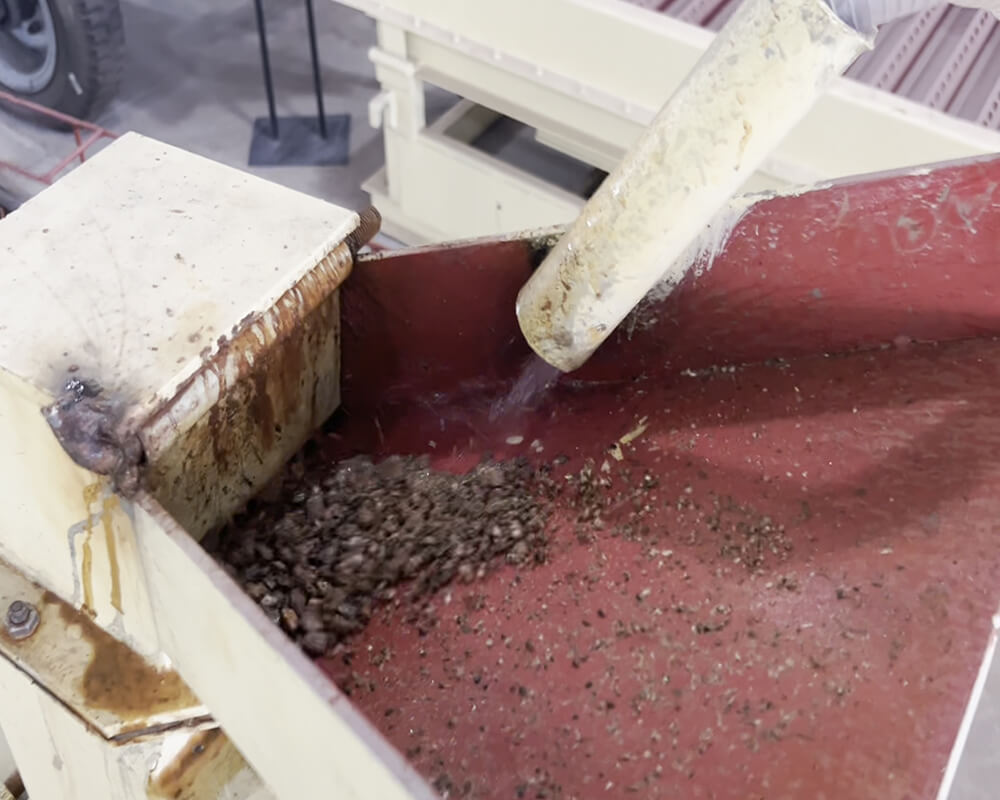
Chromite ore with excessive moisture content tends to stick to the equipment, leading to reduced crushing efficiency. Therefore, the sample needs to be dried at high temperature. In chromite crushing test, a jaw crusher is commonly used for coarse crushing equipment, with the goal of crushing the large pieces of chromite ore after sample reduction to a particle size suitable for fine crushing equipment (usually below 25mm). Before the operation, check that the equipment components are intact, the liners are not worn, and that there are no foreign objects in the feed opening. Feed the sample slowly and evenly into the crusher, avoiding overloading the equipment or causing sample splashing. Safety glasses and dust masks should be worn during operation.
3. Fine Crushing and Grinding
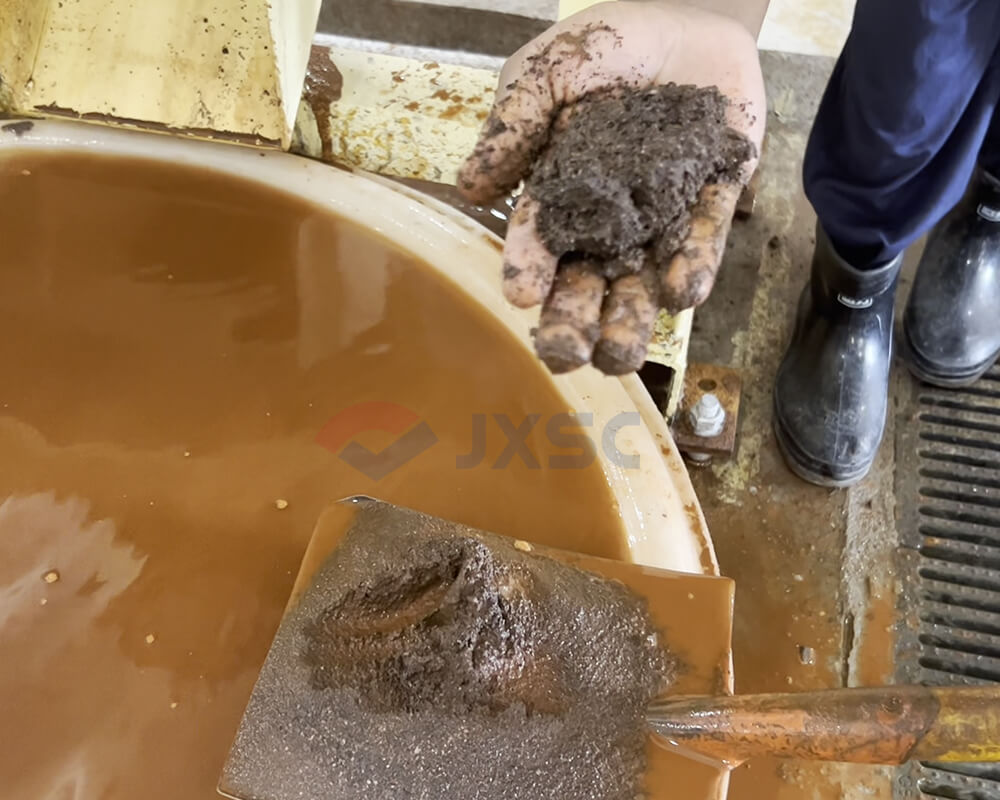
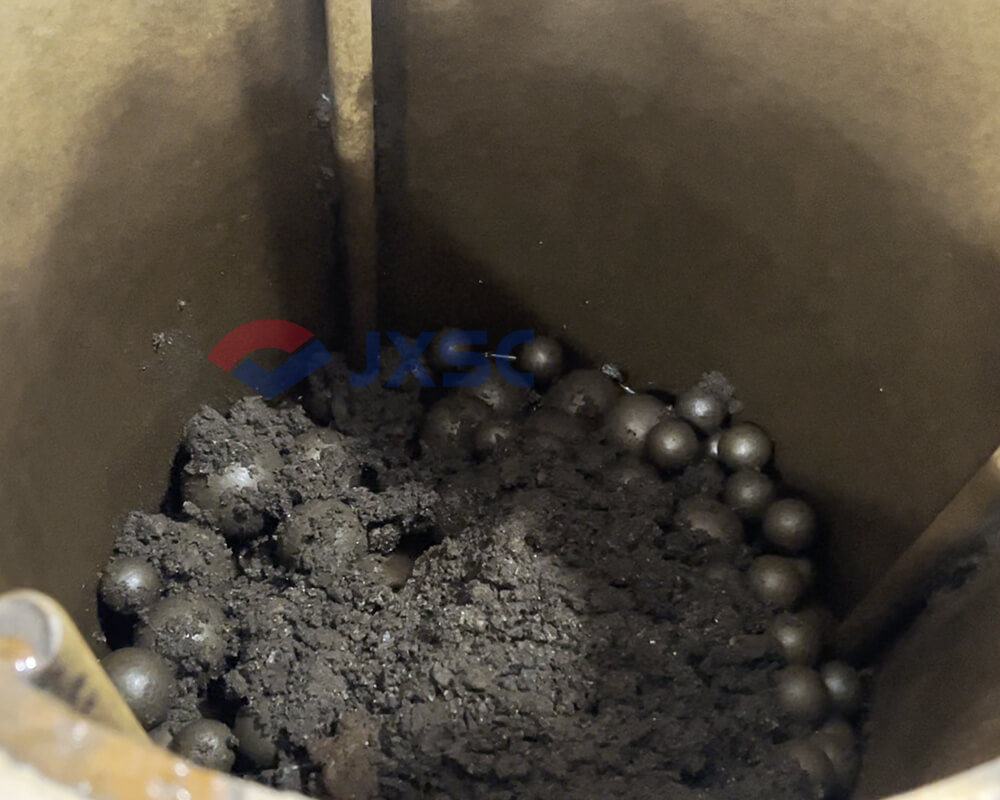
In chromite crushing test, fine crushing and grinding are core steps in further reducing the size of the coarsely crushed sample to the particle size required for mineral processing experiments (e.g., below 200 mesh). Fine crushing can be performed using a hammer crusher or a roller crusher to reduce the sample to approximately 5 mm, after which it is transferred to a lab rod mill for grinding. During grinding, appropriate grinding media, such as agate balls or alumina balls, should be selected based on the sample properties to avoid introducing impurities. During chromite ore grinding, the fineness of the sample should be checked periodically by stopping the mill. If the fineness is not satisfactory, the grinding time can be extended. After grinding, the sample is initially screened using a standard sieve, and any material that does not pass through the sieve is returned to the ball mill for further grinding.
4. Sieving and Particle Size Analysis
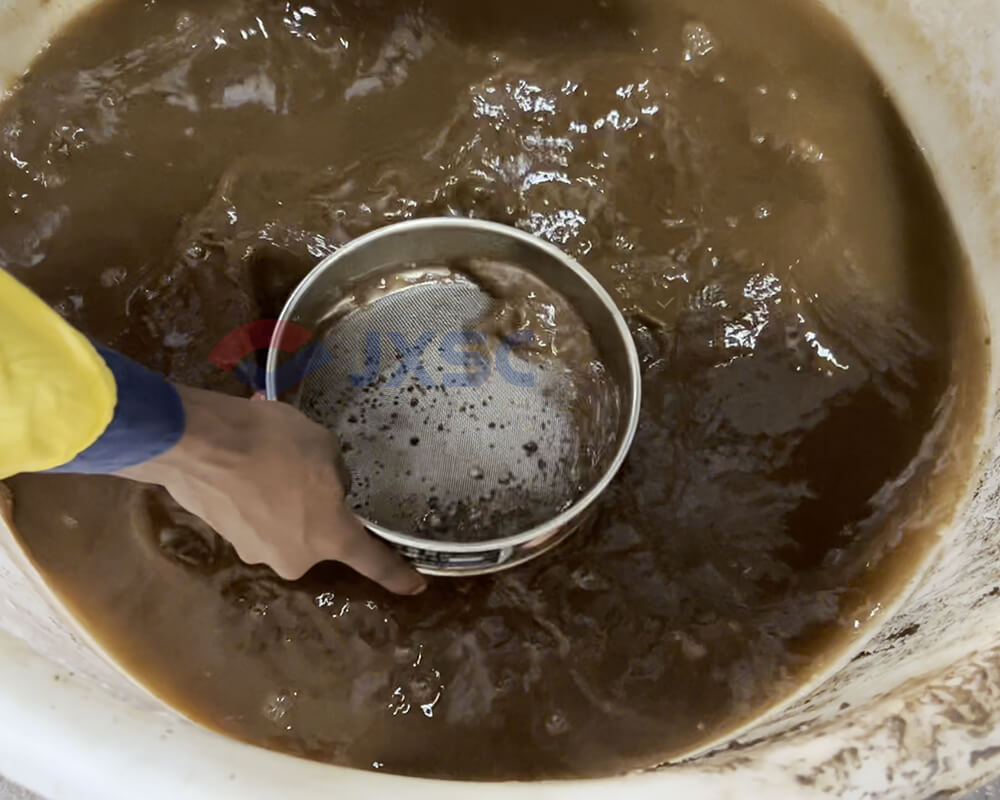
Sieving and particle size analysis are used to verify whether the sample meets the testing requirements and to provide basic data for subsequent experiments. First, the ground sample is sieved using a standard test sieve (such as a 200-mesh sieve). Particles that do not pass through the sieve must be returned for further grinding to ensure that all fine particles pass through the sieve. For quantitative analysis of particle size distribution, laboratories commonly use laser particle size analyzers or sedimentation methods, which can quickly determine the mineral particle size distribution. For the sieved sample, a laser particle size analyzer is used for precise particle size distribution testing, and the mass percentage of different particle size fractions is recorded, providing a reference for subsequent mineral processing or compositional analysis.
Conclusion
Chromite sample preparation is the cornerstone of crushing tests. Following standardized procedures significantly reduces human error and ensures reliable test data. Accurate sampling, proper drying, fine crushing, and particle size analysis are all essential. Through standardized sample preparation processes, we help companies accurately control ore hardness and crushing characteristics, enabling efficient resource utilization. For customized chromite crushing testing services or equipment, please contact us. The professional team at JXSC (Asia-Africa International) will provide you with tailored mineral processing testing solutions!