
In the field of lithium ore beneficiation, how can lithium be recovered using the most efficient methods while simultaneously minimizing energy consumption and waste? Driven by the rapid global expansion of the new energy industry and the energy storage market, the demand for lithium—a critical raw material for batteries—is experiencing exponential growth. However, given the increasing depletion of high-grade lithium ore resources, the recovery of lithium from low-grade ores, tailings, and even complex associated mineral deposits now accounts for a steadily rising proportion of total production. Many project owners, in an effort to meet tight deadlines, often bypass preliminary beneficiation testing; consequently, upon directly commissioning production lines, they frequently encounter issues such as substandard recovery rates and cost overruns. This article provides a detailed examination of 3 high-yield lithium recovery tests solutions—gravity separation, flotation, and magnetic separation—each validated through extensive project applications. These methods enable you to verify the feasibility of your lithium beneficiation value in advance, thereby mitigating the risks associated with commissioning and production.
3 proven lithium recovery tests: gravity separation, flotation, and magnetic separation. Cover a diverse range of ore types, including coarse-grained spodumene, finely disseminated lepidolite, and low-grade associated lithium ores, thereby enabling the early identification of high-yield, high-return processing routes.
Table of Contents
1. Lithium Gravity Separation Recovery Tests
Gravity Separation Test Flow:
- Particle Size Analysis: A representative sample of raw ore is collected and subjected to screening across six standard size fractions. The particle size distribution of the raw ore is determined using a combined method involving physical screening and laser particle size analysis. The Li₂O grade of each size fraction is assayed to establish the distribution rate of lithium metal and to identify the critical particle size threshold at which direct rejection of waste material becomes feasible. Measurement errors are strictly controlled within 2% to ensure the reliability and reference value of the subsequent test results.
- Density Gradient Testing: Four sets of heavy liquids with varying density gradients are prepared to separate the ore samples. Theoretical recovery rates at different density levels are calculated to determine the optimal density range for mineral separation.
- Separation Testing: Laboratory-scale equipment—such as small-scale jigs, spiral chutes, or shaking tables—is utilized to simulate industrial-scale separation conditions. Parameters such as pulp density and feed rate are optimized to provide data support for subsequent large-scale production operations.
- Performance Metric Calculation: The Li₂O content in both the concentrate and the tailings is assayed separately to calculate the recovery rate and enrichment ratio. By integrating an economic feasibility analysis (including factors such as waste rejection rate and energy consumption), the overall viability of the gravity separation process is evaluated.
Applicable Scenarios:
Gravity separation is the preferred pretreatment method for coarse-grained lithium ores. It is primarily suited for spodumene and lepidolite deposits characterized by a liberation size exceeding 0.5 mm and a density difference of ≥1 g/cm³ between the lithium minerals and the gangue. It is also highly effective for projects involving the recovery of lithium-bearing tailings generated during the extraction of lithium from salt lakes. If preliminary analysis confirms that an ore sample possesses these characteristics, prioritizing gravity separation testing can significantly alleviate the processing burden on subsequent beneficiation stages, thereby avoiding issues such as reagent wastage and insufficient processing capacity often associated with direct flotation. As it requires no chemical reagents, this method is both environmentally friendly and energy-efficient, making it particularly ideal for the preliminary beneficiation of coarse-grained, disseminated-type lithium ores.
However, gravity separation testing is not suitable for fine-grained lithium ore types with a liberation size of less than 0.2 mm. In cases involving complex polymetallic ores, gravity separation techniques must be employed in conjunction with flotation or magnetic separation technologies.
2. Lithium Flotation Recovery Tests
Flotation Test Flow:
- Ore Liberation Analysis: The ore sample is crushed and ground to various fineness levels to determine the degree of lithium mineral liberation at different grinding particle sizes.
- PH Adjustment Tests: Six distinct pH gradients are established to evaluate the flotation recovery rate of lithium minerals across a range of acidity and alkalinity levels, thereby identifying the optimal pH range.
- Reagent Dosage Optimization: Various combinations of collector and depressant dosages are tested to identify the reagent scheme that yields the lowest cost while maximizing recovery rates.
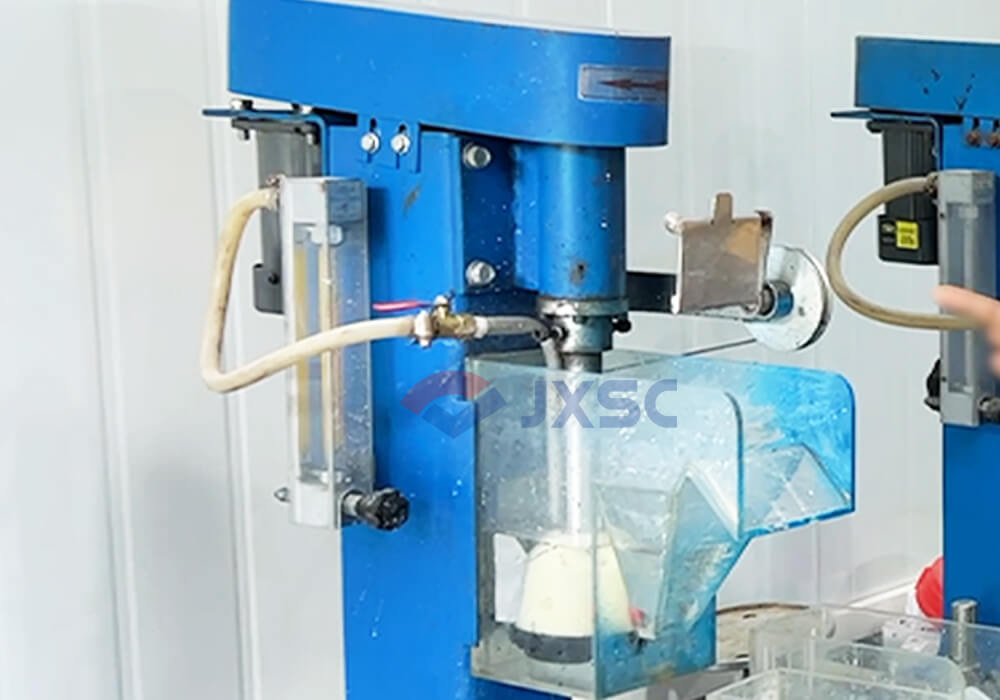
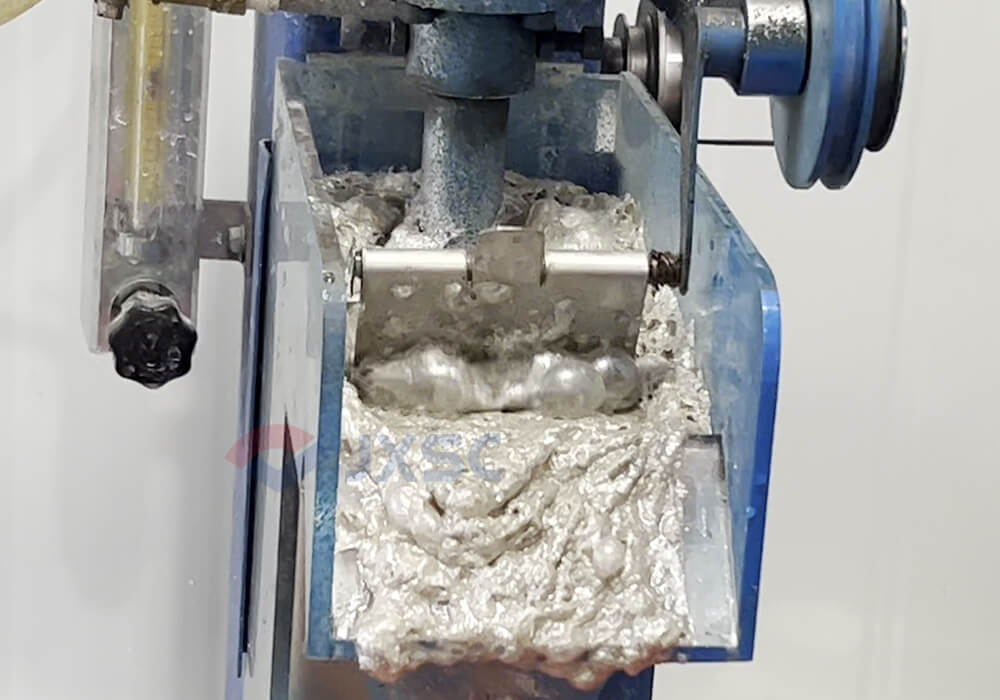
- Flotation Testing: A closed-circuit flotation test—comprising one roughing stage, three scavenging stages, and three cleaning stages—is conducted using a small-scale laboratory flotation machine to simulate the industrial production process and evaluate separation efficiency.
- Data Analysis: The final concentrate undergoes XRF and XRD analysis to verify that the Li₂O grade and impurity levels meet established standards. Based on these results, and taking into account factors such as reagent costs and energy consumption, a comprehensive industrial-scale implementation plan is proposed.
Applicable Scenarios:
Flotation is currently the only lithium recovery test process capable of consistently meeting required standards; it also serves as the core technology for the beneficiation of fine-grained lithium ores, achieving recovery rates exceeding 95%. It is primarily suited for spodumene, lepidolite, and petalite ores characterized by fine mineral dissemination (typically <0.2 mm) and complex mineral associations. This method is particularly effective in addressing the demand for battery-grade raw materials, where it is necessary to upgrade the lithium concentrate grade to over 5.5%. Furthermore, it is ideally suited for the recovery of lithium from complex resources, such as low-grade associated lithium ores and polymetallic ores containing associated lithium.
3. Lithium Magnetic Separation Recovery Tests
Magnetic Separation Testing Flow:
- Magnetic Component Analysis: A representative sample of the raw ore is collected to conduct a comprehensive analysis of its magnetic constituents—specifically, determining the relative proportions of strongly magnetic, weakly magnetic, and non-magnetic components. Each component is then assayed to determine its iron content and Li₂O grade. This process clarifies the distribution of lithium across the various magnetic fractions and enables an assessment of the suitability of magnetic separation for the ore.
- Magnetic Field Strength Gradient Analysis: Tests are conducted across a range of magnetic field strength gradients to evaluate, at each specific field intensity, the removal rate of iron impurities versus the loss rate of lithium. By balancing impurity removal efficiency against recovery yield, the optimal range of magnetic field strength is identified.
- Comparison of Dry vs. Wet Separation: Taking into account the water resource availability within the project’s specific region, comparative tests are performed using both dry and wet magnetic separation methods. The two processes are evaluated based on their differences in impurity removal efficiency, energy consumption, and water usage, to prioritize the method best suited to the project’s actual operating conditions.
- Recovery Rate Calculation: Data from multiple sets of parallel tests are aggregated to calculate the overall iron impurity removal rate, the recovery rate of the lithium concentrate, and the impurity content within the concentrate product. These results are then benchmarked against the performance of alternative processing methods to formulate and deliver a set of magnetic separation parameters specifically tailored to the project’s requirements.
Applicable Scenarios:
Magnetic separation testing represents a cost-effective process for the removal of impurities, purification, and recovery of lithium ores. It is well-suited for two specific categories of lithium resources: first, standard spodumene and lepidolite ores that contain strongly magnetic iron impurities. For instance, since battery-grade lithium concentrates require an iron content of ≤0.5%, magnetic separation offers a low-cost solution for achieving this level of impurity removal.
Customized Lithium Recovery Test Solutions
Tailored to suit various types of lithium ores, our core lithium recovery tests: gravity separation, flotation, and magnetic separation—enable lithium mine owners to identify and lock in the optimal processing route in advance. This approach not only reduces the costs associated with trial-and-error during the commissioning phase but also significantly boosts concentrate yield, recovery rates, and overall project ROI. We recommend selecting testing equipment based on a comprehensive assessment of ore particle size, target production capacity, and investment budget, while utilizing laboratory-scale tests to validate the feasibility of large-scale beneficiation operations.
Whether you are optimizing an existing beneficiation line or planning a new lithium processing project, these methodologies will help you strike the ideal balance between high efficiency, cost-effectiveness, and sustainable production.
Asia-Africa International (JXSC) offers comprehensive mineral processing test service, end-to-end support—spanning mineral analysis, process design, equipment selection, and full-scale plant implementation—to help you maximize both recovery rates and economic returns!