
Have you chosen the right ore sorting method? 90% of concentrators make mistakes when choosing between gravity separation and magnetic separation! In actual production, mine owners often struggle with issues such as high sorting costs, low recovery rates, and large equipment investments. Many mining companies make blind decisions because they don’t understand the compatibility boundaries between the two types of tests in the early stages, resulting in either unsatisfactory recovery rates or unnecessary expenses of hundreds of thousands in trial and error costs. Therefore, a laboratory test is an indispensable first step for concentrators, which can mean a cost difference of millions. Is gravity separation or magnetic separation test more suitable for your ore? This article will break down the core differences and compatibility boundaries of the two mainstream concentrator tests to help you quickly select the most suitable lab test solution for your ore.
Lab tests are like a “health check report” for ores, accurately revealing their core parameters such as density, magnetism, and dispersal characteristics. This provides data support for mineral processing decisions, helping you identify the optimal solution in the “first step” of sorting!
Table of Contents
Why are lab tests necessary before mineral processing?
1. Predicting Beneficiation Results
Laboratory testing simulates the entire beneficiation process using small batches of ore samples. This allows for early confirmation of the ore’s mining value and whether the target concentrate grade meets downstream purchasing standards. This prevents mine owners from blindly investing millions in production lines for low-grade, difficult-to-separate ores, effectively mitigating investment risks from the outset.
2. Optimizing Process Parameters
Parameters such as magnetic field strength in magnetic separators and water flow rate in gravity separation can typically only be determined through low-cost trial and error in a laboratory setting. On-site laboratory testing allows for repeated adjustments to core indicators like speed and magnetic systems to find the optimal process combination for the ore, maximizing concentrate grade and recovery rate.
3. Estimating Beneficiation Costs
The testing process accurately tracks costs such as water, electricity, and equipment wear and tear. Mine owners can then combine this data with current concentrate purchase prices to precisely calculate the project’s payback period and annual rate of return. Furthermore, it allows for advance application for relevant environmental approvals, avoiding the risk of fines due to policy changes during subsequent production.
Comprehensive Analysis of Lab Gravity Separation Testing
(1) Core Principle:
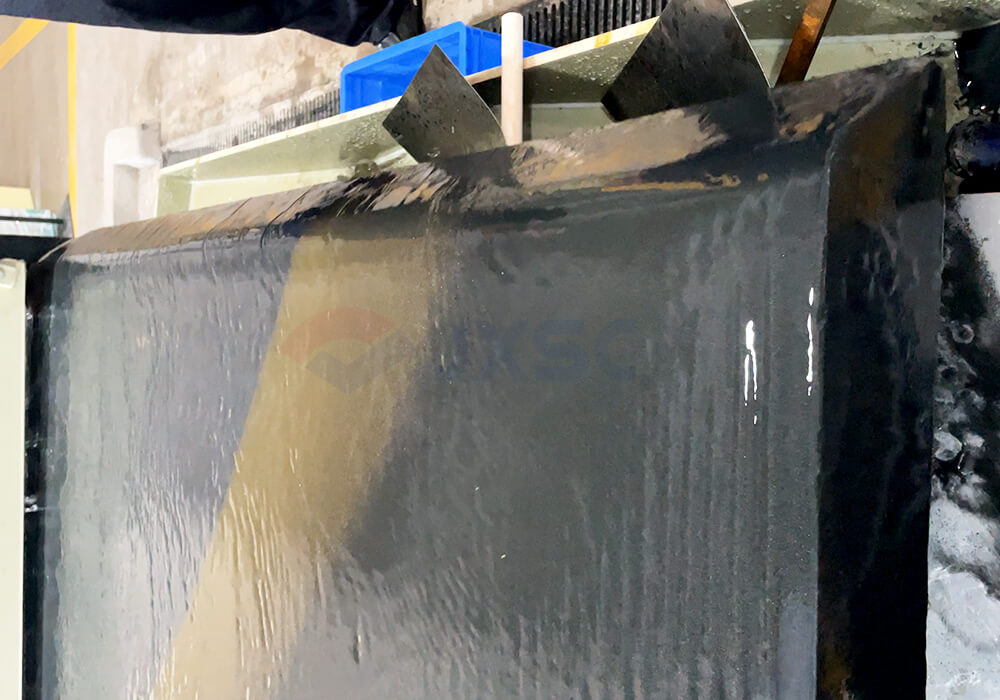
Gravity separation testing simulates the natural sedimentation process of minerals. In a laboratory environment, small gravity separation equipment such as shaking tables, jigs, spiral sluices, and centrifugal concentrators is used to simulate the forces under industrial conditions, including water flow impact, mechanical vibration, and centrifugal force. This allows denser useful minerals to settle to the lower layer and less dense gangue minerals to float to the upper layer. The entire process relies entirely on differences in physical properties to achieve high-efficiency separation.
(2) Applicable Ore Types:
This gravity separation testing technology is suitable for minerals with relatively coarse particles and significant density differences, covering various metals, non-ferrous metals, ferrous metals, new energy minerals, and non-metallic minerals. It is most widely used in the beneficiation of placer gold, tungsten-tin, chromite, copper, tantalum, and niobium, and is basically the preferred mineral processing testing solution for all types of ores.
(3) Advantages:
The low cost of gravity separation testing is only about half that of magnetic separation testing. No reagents are added throughout the process, and no additional environmental treatment costs are required. The single-unit testing cycle is short, making it suitable for projects requiring rapid acquisition of basic sorting data. It boasts high operating efficiency, making it particularly suitable for processing low-grade but abundant mineral resources.
(4) Disadvantages:
If the particle size of the valuable minerals in the ore is smaller, or the density difference between the valuable minerals and gangue is less than 1, the stratification effect of gravity separation will significantly decrease. In such cases, it may be necessary to combine it with auxiliary methods such as flotation or magnetic separation to improve the recovery rate, but this will significantly increase costs.
Comprehensive Analysis of Lab Magnetic Separation Testing
(1) Core Principle:
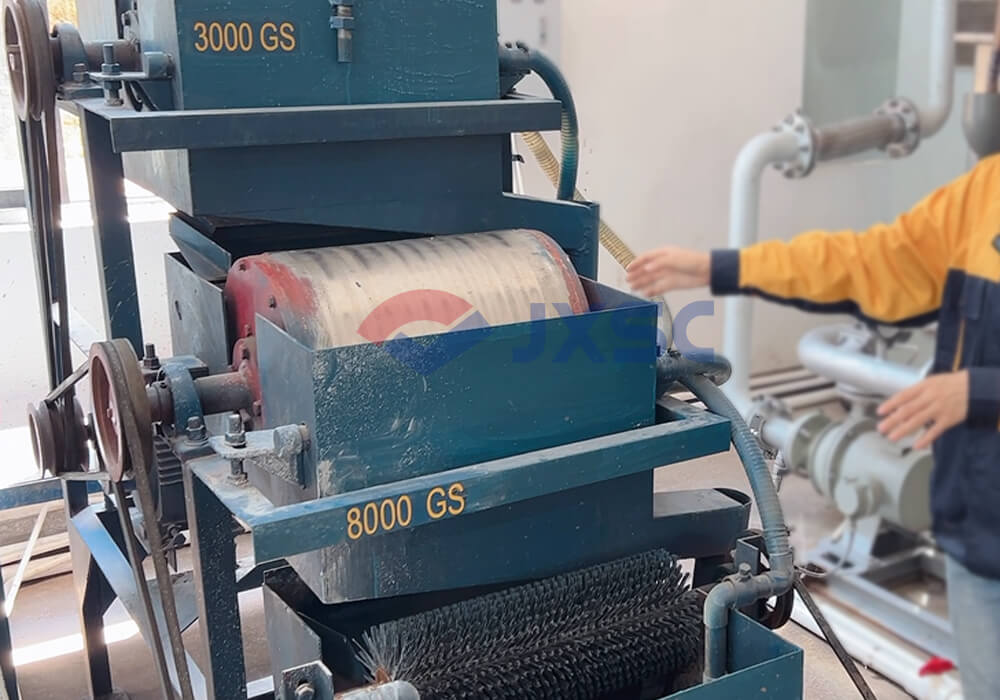
Magnetic separation technology uses the natural magnetic differences among minerals to separate them. Under the influence of a magnetic field, strongly magnetic minerals are directly adsorbed, while weakly magnetic minerals require a high-gradient magnetic separator for separation. The entire process allows for the precise separation of different magnetic minerals by adjusting the magnetic field strength. Compared to chemical beneficiation, magnetic separation does not require the addition of reagents, making it a green and environmentally friendly method of mineral enrichment.
(2) Suitable Ore Types:
This magnetic separation test technology includes equipment such as three-disc magnetic separators, slurry magnetic separators, high-intensity magnetic separators, and drum magnetic separators. It is commonly used for the efficient enrichment and impurity removal of magnetic minerals such as ilmenite, tantalum, niobium, and tin. For weakly magnetic manganese ore and fine-grained hematite, high-gradient magnetic separation equipment is required to improve the recovery rate. Furthermore, non-metallic minerals such as kaolin and quartz sand often utilize magnetic separation to remove iron, thereby improving product purity. It is particularly suitable for processing ores dominated by magnetite. Laboratory tests typically require multiple assessments to determine the optimal magnetic field strength, slurry concentration, and feed rate, ensuring the best performance in actual mineral processing lines.
(3) Advantages:
Magnetic separation is highly effective at only separating magnetic minerals, achieving recovery rates exceeding 95% under ideal conditions. Compared to chemical methods like flotation, magnetic separation has a shorter testing cycle, allowing for rapid optimization. Since no reagents are required, subsequent wastewater treatment is simpler, making it particularly suitable for mineral processing projects with stringent environmental requirements.
(4) Disadvantages:
Magnetic separation testing is not suitable for separating non-magnetic minerals. Furthermore, the purchase and maintenance costs of magnetic separation equipment are high; the cost of a single test is typically about twice that of gravity separation testing, significantly increasing upfront investment. Therefore, it is generally recommended to assess feasibility through laboratory testing before deciding whether to implement it in an industrial production line.
Lab Gravity Vs. Magnetic Separation Test: How to choose?
In short, there is no absolute superiority or inferiority between gravity separation and magnetic separation in laboratory testing; the only difference lies in whether they are suitable for your ore properties. If the ore has a significant density difference or is coarse- to medium-grained, gravity separation should be prioritized. For strongly/weakly magnetic minerals, magnetic separation is the obvious choice. For complex ores, such as fine-grained, low-density-difference, and weakly magnetic minerals, a combined gravity separation and magnetic separation process can be used.
Specific lab test equipment & solutions need to be matched based on the ore’s density difference, magnetic characteristics, and particle size to help minimize initial trial-and-error costs. If you are unsure which mineral processing solution is suitable for your ore, don’t hesitate to get in touch with us at any time. Asia-Africa International(JXSC) provides customized mineral processing testing services to maximize your beneficiation profits.