
Do you really understand laboratory beneficiation testing? In which industries can it be applied? Amidst today’s intensifying global competition for mineral resources, these tests simulate industrial-scale mineral processing within a laboratory setting, providing reliable process parameters to support actual production. From traditional resources like iron and copper ores to strategic emerging minerals such as lithium and rare earths, over 80% of mining projects rely on precise test data regarding ore treatability to inform plant design or technical upgrades. Consequently, lab beneficiation testing serves as the crucial first step in mitigating investment risk and offers the highest potential return on investment. This article explores the technical applications and the value of these tests across various sectors, providing a comprehensive overview of this critical technology.
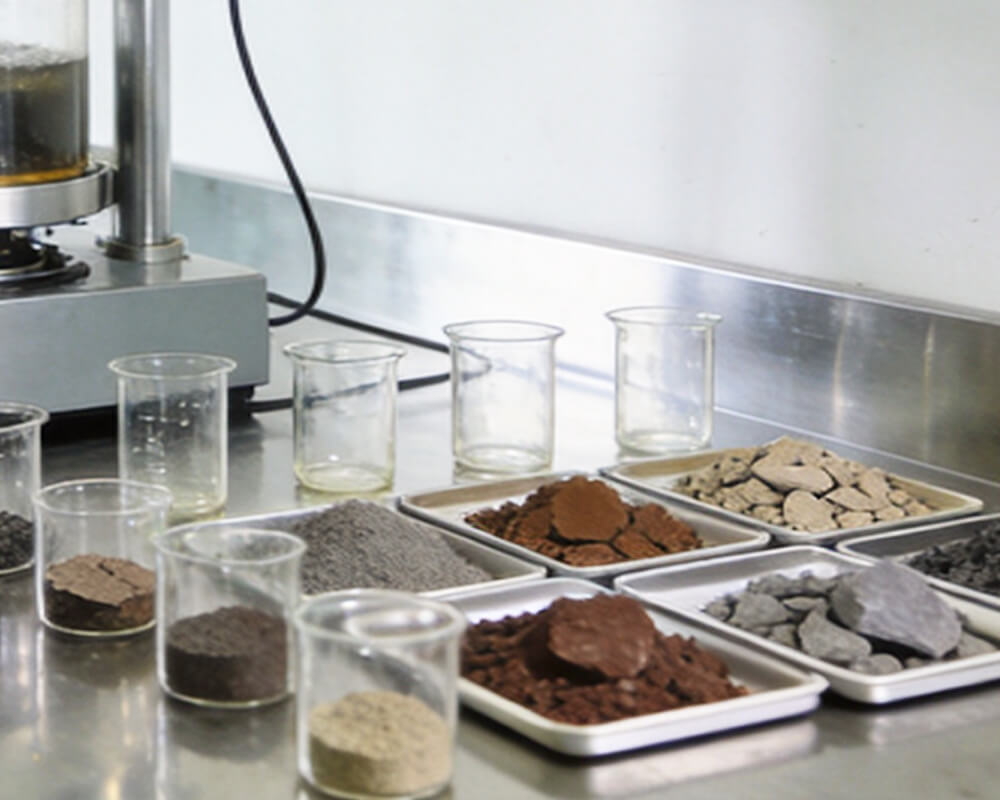
Lab beneficiation testing is not merely an optional technical step; rather, it serves as a strategic decision-making tool across a wide range of industries including mining, mineral processing, metallurgy, chemical purification, building materials processing, environmental remediation, and even new energy materials—directly determining the success and profitability of industrial projects.
Table of Contents
What is lab beneficiation testing?
(1) Definition
Lab beneficiation testing is a scientific method that evaluates the processing performance of ore by using a small-scale, precisely controlled experiment on a representative ore sample. It enables the prediction of mineral processing metrics for industrial-scale production, thereby significantly reducing the risks associated with commercialization. Typically serving as the initial step in mineral development, this process facilitates the precise analysis of ore characteristics and the determination of optimal equipment parameters and process flows, leading to a substantial increase in resource utilization efficiency. Currently, this “micro-plant” style of testing is becoming a standard practice in modern mineral resource development.
(2) Core lab beneficiation Testing Scope
- Process Mineralogy Analysis: Utilizing tools such as X-ray diffraction and high-precision microscopy to rapidly obtain key data—including mineral composition, dissemination size, and liberation characteristics. This identifies the types of valuable minerals and gangue present, establishing a theoretical foundation for the beneficiation process.
- Comminution and Sample Preparation: Representative ore samples undergo multiple stages of crushing (coarse, medium, and fine) to achieve the particle size required for testing. Small-scale laboratory crushing equipment is primarily used to produce uniform test samples.
- Grinding Energy Efficiency: Simulating the ball milling process using a Bond Work Index tester to calculate the energy consumption required to grind material to a specified fineness. Analyzing the work index and grindability helps enterprises select the most energy-efficient grinding scheme.
- Particle Size Analysis: Common methods include standard sieving and small-scale vibrating screen analysis to determine the particle size distribution of the material.
- Color Sorting: Utilizing differences in mineral color and luster to achieve automatic sorting via optical color sorters.
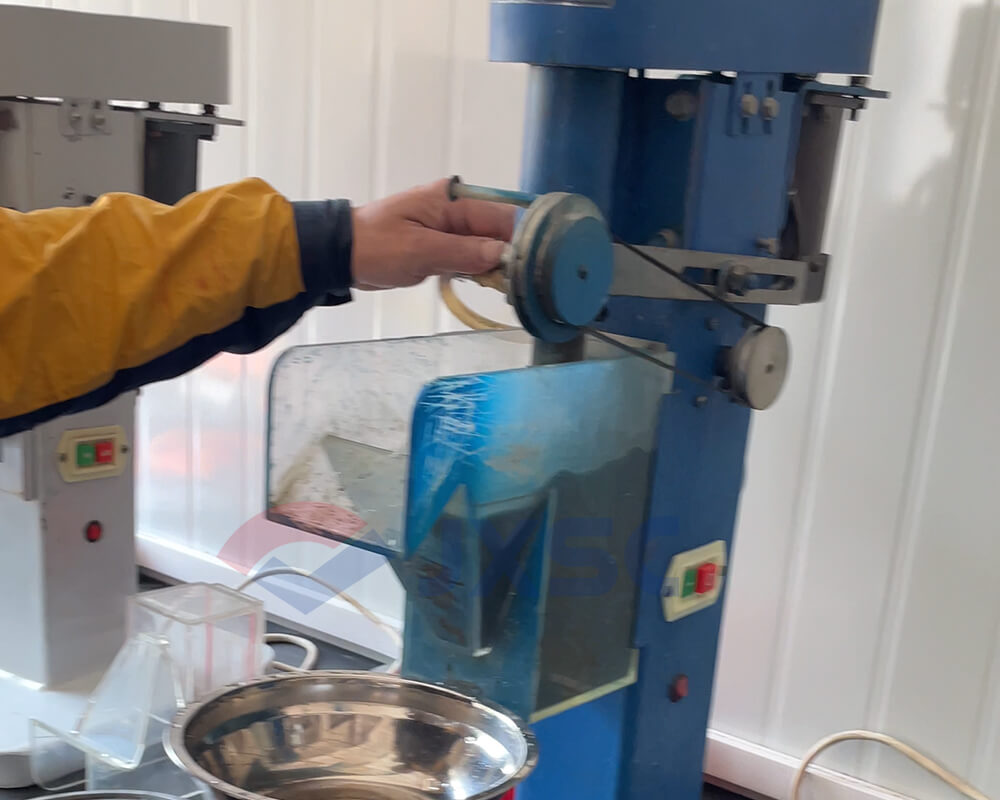
- Beneficiation Test: Determining optimal process conditions for the target ore by iteratively adjusting technical parameters for gravity separation, flotation, magnetic separation, and electrostatic separation. Specific methods—or combinations thereof—are selected based on the ore’s properties.
- Solid-Liquid Separation: Using thickeners and filters to assess the dewatering performance of concentrates and tailings, measuring indicators such as settling velocity and filtration rate. This primarily provides the basis for optimizing tailings management and water recycling.
6 Application Industries That Need Lab Beneficiation Tests
1. Mining and Mineral Processing
Application Scenarios: Covers beneficiation testing for a full range of ores, including non-ferrous metals (copper, lead-zinc, tungsten-tin), ferrous metals (iron, manganese), and precious metals (gold, silver). It is particularly suitable for resource assessment of low-grade, complex ores.
Core Value: Beneficiation tests help mine owners determine optimal grinding fineness and reagent formulas, providing reliable data for designing the best processing scheme. Additionally, optimized gravity separation & flotation process parameters reduce electricity consumption and reagent waste.
2. Metallurgy
Application Scenarios: Metallurgical enterprises use beneficiation tests to understand raw material characteristics and research the recovery of valuable metals from slag before smelting, thereby preventing quality issues during the furnace process.
Core Value: Tests reveal impurity distribution in advance, ensuring stable raw material quality and reducing furnace lining erosion and fuel consumption.
3. Chemical Industry
Application Scenarios: Widely used in the beneficiation and purification of chemical raw materials such as phosphate rock, potash, fluorite, and barite, as well as in research on separating and recovering valuable components from industrial solid wastes like coal gangue and red mud.
Core Value: Chemical production imposes strict limits on raw material impurity content. Laboratory flotation or acid leaching tests identify the best impurity removal methods, significantly increasing product added value.
4. Building Materials Industry
Application Scenarios: Includes deep processing of non-metallic minerals—such as impurity removal from limestone, purification of quartz sand, and whitening of kaolin—as well as the development of processes to remove harmful impurities from construction materials.
Core Value: Beneficiation tests help enterprises identify the most cost-effective purification pathways; for instance, removing iron from quartz sand can upgrade it from ordinary construction-grade sand to photovoltaic-grade raw material. This elevates material quality, meeting the high-end market’s strict requirements for purity, whiteness, and strength.
5. New Energy Materials
Application Scenarios: Focuses on lithium extraction from sources like spodumene and salt lake brines, as well as the development of recovery processes for strategic metals—such as cobalt, nickel, and manganese—from spent lithium batteries.
Core Value: Laboratory beneficiation testing provides reliable technical support for the new energy supply chain, enabling the economical extraction of these strategic resources from low-grade ores.
6. Environmental Remediation and Tailings Utilization
Application Scenarios: Primarily used in environmental projects such as assessing the resource recovery potential of legacy tailings, developing mineral-based remediation technologies for contaminated soil, and optimizing mineral processing wastewater treatment processes. It is also suitable for recovering associated valuable metals from tailings.
Core Value: Gravity separation or flotation tests allow for an accurate assessment of the economic feasibility of recovery. Furthermore, recovering an additional valuable element not only creates a new revenue stream for the mining operation but also alleviates pressure regarding environmental regulatory compliance.
Conclusion
Lab beneficiation testing is far more than just a technical step within a mine laboratory; it serves as a critical decision-making tool spanning multiple industrial sectors, including mining, mineral processing, metallurgy, construction materials, and environmental protection. Moreover, it represents the most cost-effective initial step toward mitigating investment risks and maximizing project returns. Whether assessing ore characteristics during the early exploration phase or optimizing the final mineral processing flowsheet, specialized testing provides the necessary scientific basis and data support. Since lab test solutions vary significantly depending on the ore type, each approach must be validated through rigorous testing. If you are seeking tailored beneficiation test solutions for project development or resource utilization, please contact JXSC; we provide comprehensive technical support covering everything from laboratory equipment to industrial-scale applications.